


Dental implants are a long-lasting solution for individuals with missing teeth, providing improved aesthetics, function, and oral health.
They mimic the natural tooth structure and help maintain jawbone integrity, making them a popular choice for tooth replacement.
While titanium has been the most commonly used material for dental implants due to its low allergy risk, recent scientific research has revealed potential concerns. These studies suggest that titanium may corrode over time, leading to the spread of fragments into surrounding tissues and even distant body areas. This corrosion can trigger inflammatory responses, particularly in individuals with a genetic predisposition to such reactions.

The arrows in the picture point to titanium particles detected in the tissue around the implant. These particles are recognised as “foreign” by the body and are engulfed by macrophages, which can trigger inflammatory reactions.
(source article: https://europepmc.org/article/med/29440784).
The material to which we make reference in implants or coatings, the one unfortunately “zirconium” in our terminology, actually “zirconia”. The material to which we give the name zirconia is the crystal zirconium oxide (ZrO2) and is not metallic. Physical properties are quite distinct from zirconium. Zirconia is electrically and heat conductive, does not corrode, is white, hard, and not magnetic.
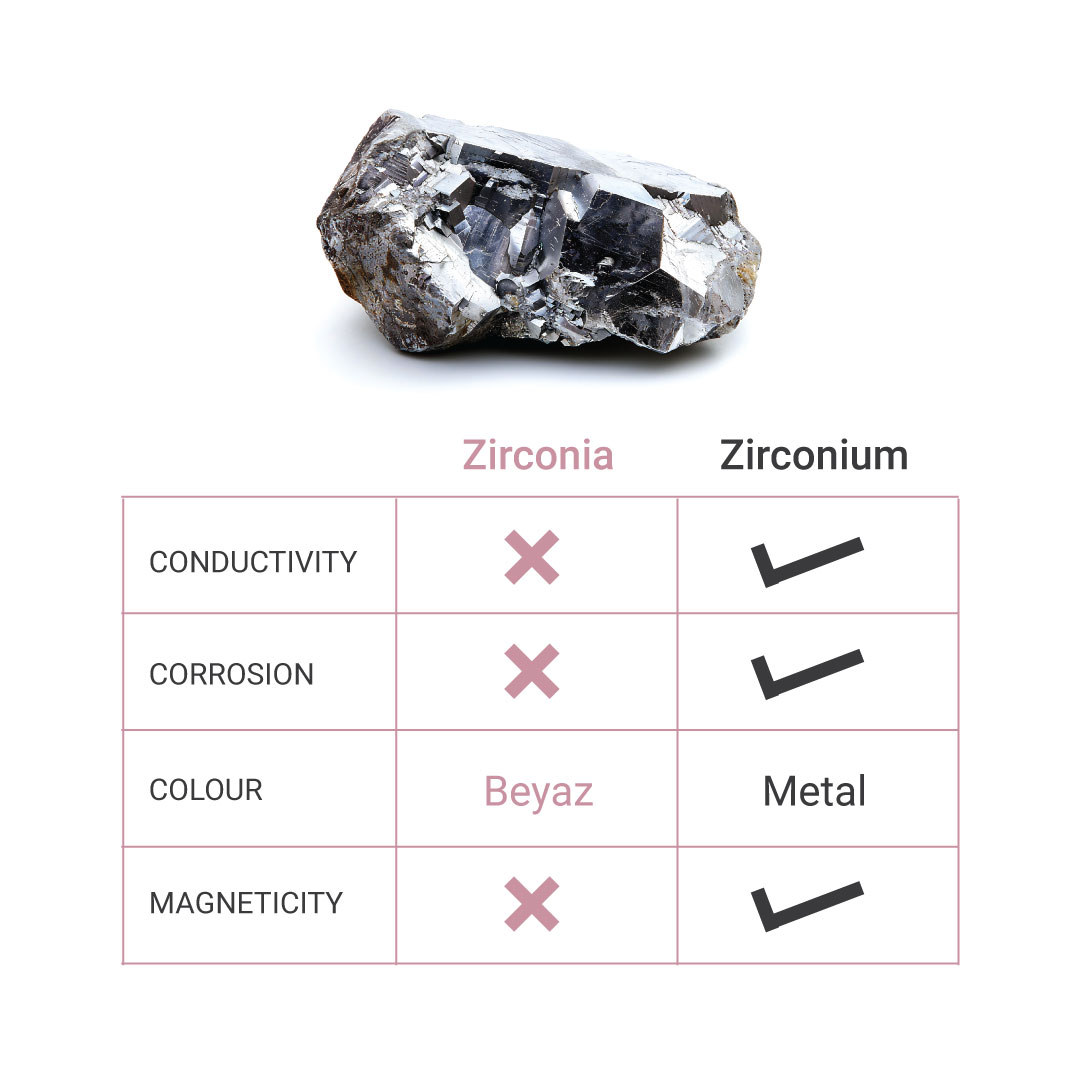
Why Ceramic Implants?
Soft tissue friendly
and less plaque
The bacterial plaque retention is extremely low in ceramic implants, and therefore the risk of inflammation of the tissue surrounding the implant is reduced.
Biocompatible
The gums naturally cover zirconia implants, and gum-addition procedures that may be required for titanium implants are not generally required for zirconia implants. Ceramic implants are made from zirconia, which is compatible with human tissue. They are hypoallergenic and significantly reduce the risk of allergic reactions and inflammation that may be caused by metal implants.
Ease of
operation
Once fitted, it can be etched and measured like your own tooth. There is no such elaborate measurement and lab stages involved with titanium. It requires minimal tooth preparation. This allows the original tooth structure to be better maintained.
Aesthetic
One of the most obvious, but simple, differences between ceramic and titanium implants is color. Being a white material, ceramic’s aesthetic benefit is particularly highlighted in patients with fine or thin soft tissue biotypes or where there is soft tissue recession. Zirconia implants also cause less mucosal discoloration than titanium.
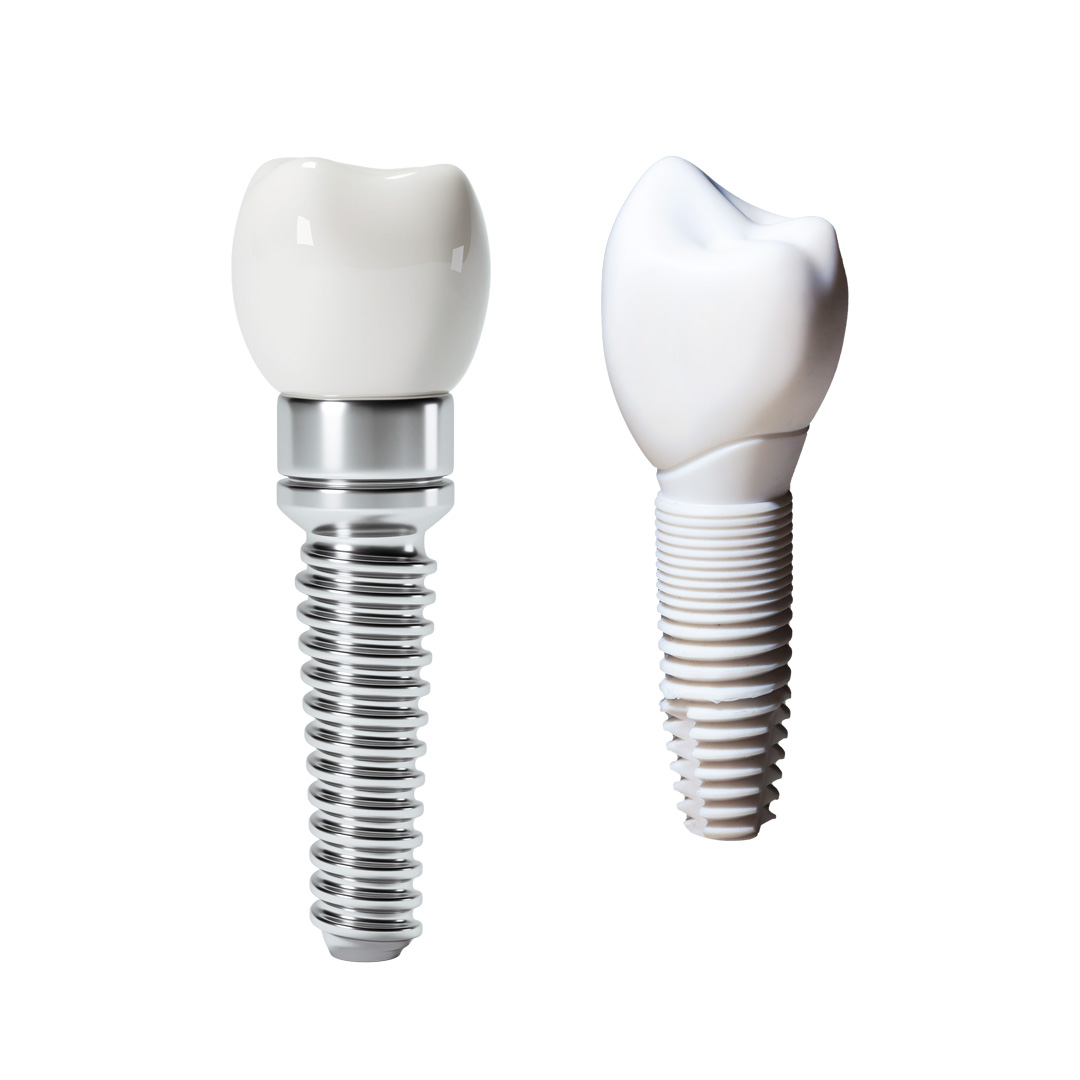
Non-conductive and
corrosion resistant
Ceramic is a biocompatible material that is resistant to chemical corrosion and does not conduct electricity or heat. The bacterial growth on the implant’s surface is minimized, which contributes to healthier gums. As a biologically inert substance, it provokes no chemical reactions, migrates to other parts of the body, or intervenes with retaining maximum oral well-being.
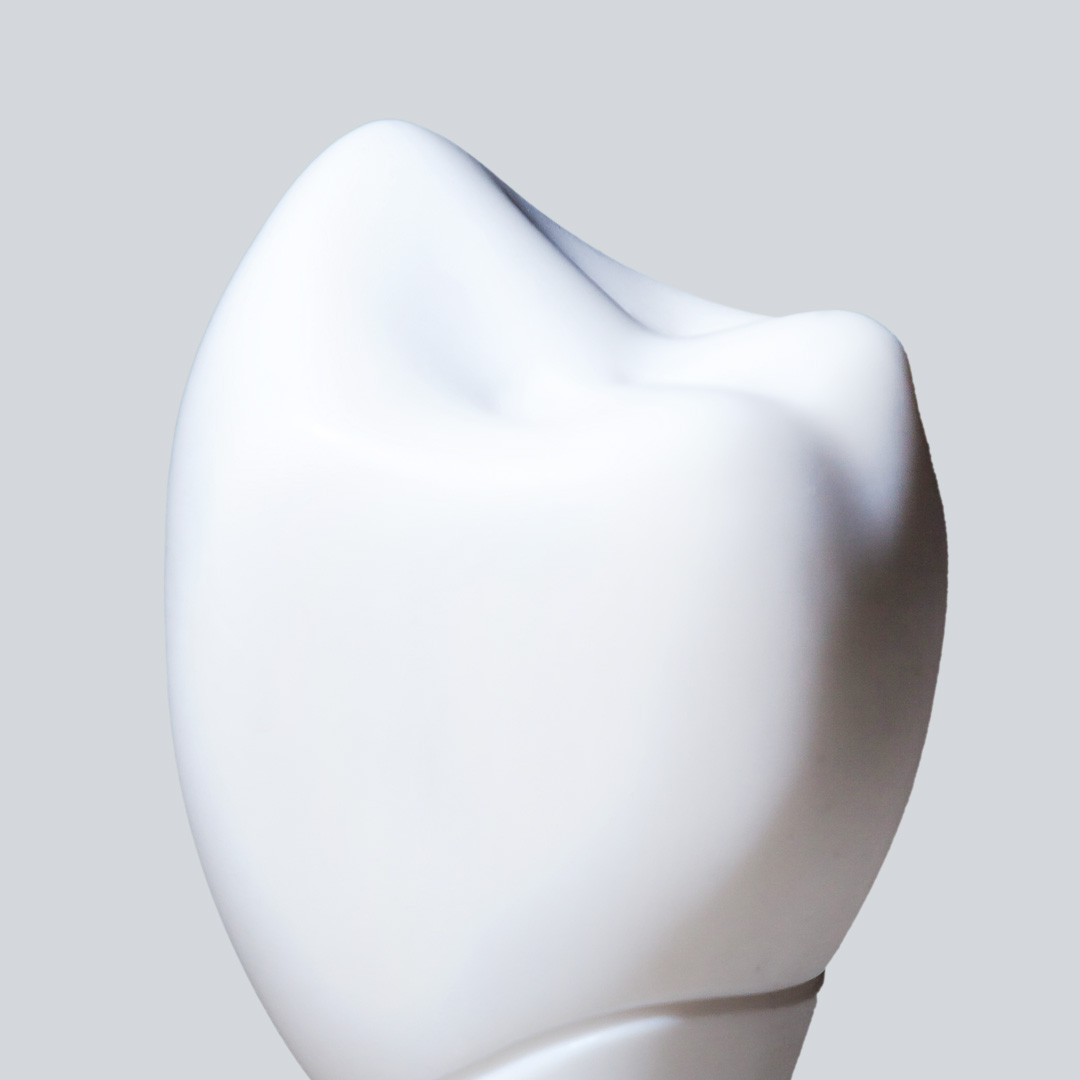
Resistant
Zirconia is an extremely strong and durable material. It is resistant to chipping, cracking and abrasion, making it ideal for dental restorations.
Stain resistance
Zirconia, unlike some other dental materials, is highly resistant to discoloration and staining. This can help to maintain the natural appearance of artificial teeth over time.
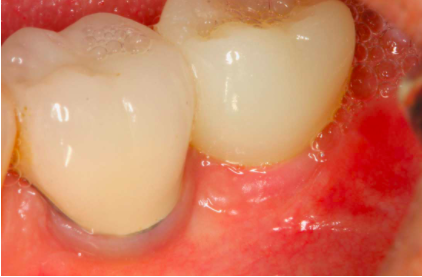
On the left of the photo you can see the teeth made using titanium and zirconia implants (ceramic implant) on the right. It is possible to observe the difference in the structure and color of the gum.
”Zirconia / ceramic implants combined with the general treatment principles of biological dentists in search of biocompatible materials, created their own application protocol. Before and after implant application, a preparation and maintenance phase that will ensure the good functioning of bone metabolism, and practices that will positively guide bone and soft tissue healing during the application, without using foreign grafting materials, are taken care of. In short, zirconia implant application is much more than using an alternative material.
Ceramic Implant Stages
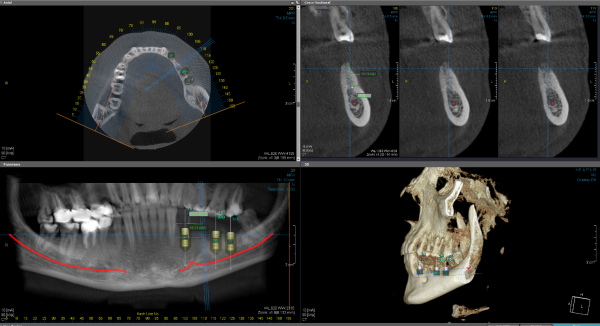
Examination of 3D Tomography and Other Images
First we ask our patients to share a recent tomography, panoramic x-rays and photos taken by a relative with the back camera of a mobile phone, where we can also examine the gums. We expect our patients to fill out the “Medical History Form” that we will share with them and to convey their treatment requests and expectations.
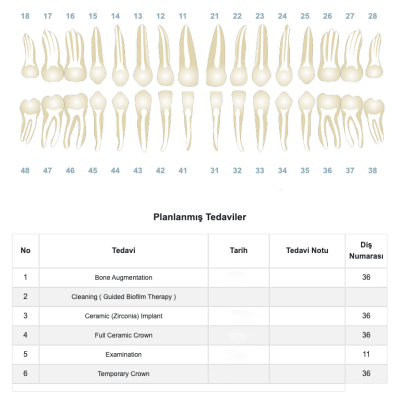
Preparation of Preliminary Treatment Plan
The medical data is examined in detail by our physicians. The suitability of the bone structure for implant operations, whether a graft, sinus lifting or other treatment will be required are examined. A preliminary treatment plan is prepared for our patients by considering all the necessary factors for the implant operation. At this stage, the approximate time to complete the treatment and the estimated total cost are also reported. If the treatment is approved, the most suitable appointment dates are shared with our patients.
Physical Examination
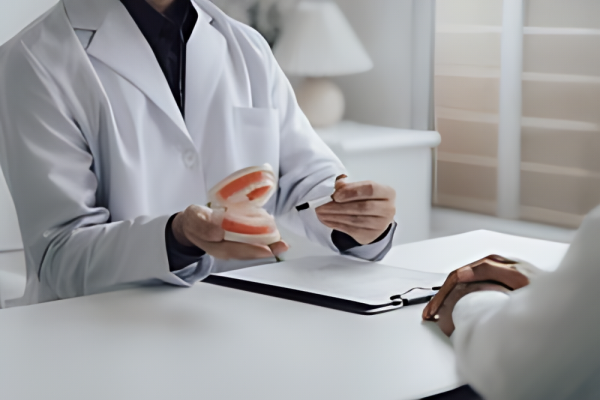
Before the implant operation, we perform a physical examination of our patients and make final evaluations on their plans and treatment expectations.
For the preparation of the implant surgical guide, digital 3D scans and professional intraoral photographs of our patients are taken.
If requested, we also refer our patients to our medical doctor whom we work with before and/or after the operation for IV vitamin C or IV Ozone supplements to strengthen the immune system.
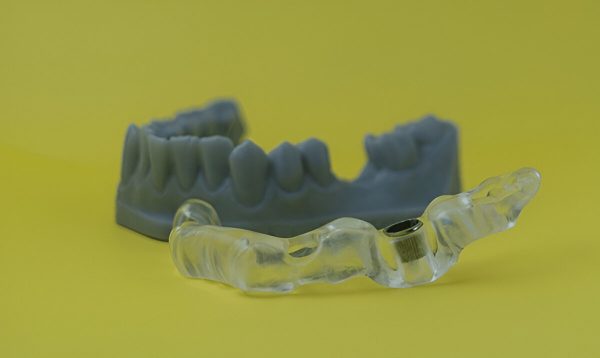
Preparation of Digital Assisted Surgical Guide
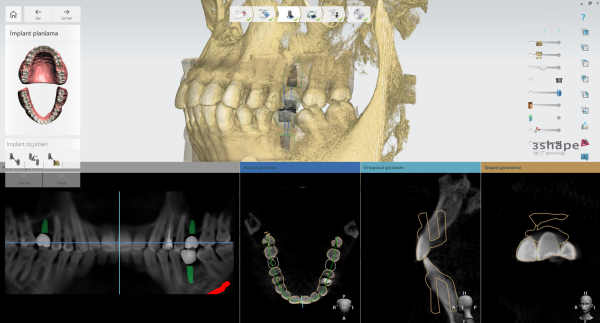
We use “surgical guide” technology to increase the success of the treatment and make the process more comfortable for you.
We design the surgical guide suitable for your jaw structure by matching the scan and tomography we receive from our patients. This process is planned completely digitally by our physicians and technicians and produced in our clinic with 3D printers.
Thanks to this guide, the area where the implant will be placed is determined with millimeter precision.
Our physicians use the designed guide during the operation and ensure that the implants are placed in the most accurate angle and position.
Operation Day
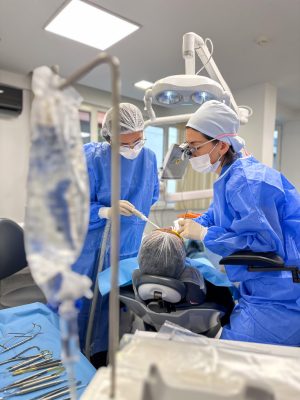
According to the plans we made beforehand, we first take blood on the day of the operation and prepare the PRF that we will use during the operation. We perform our implant placement operations with minimally invasive methods with the surgical guide we have prepared. During the surgical procedures, we provide antisepsis of the operation area by using dental ozone.
A few days after the operation, we call our patients for a follow-up appointment to check that everything is in order.
Permanent Ceramic Crown
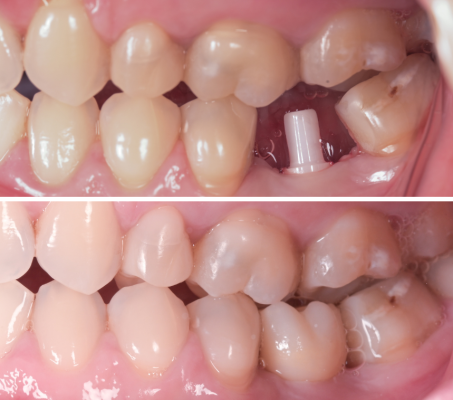
For the placement of the permanent ceramic crowns, we need two or three more sessions 4 to 6 months after implant placement (osteointegration period).
In the first session, we prepare the implant area and gingiva and send the digital impression to the laboratory. Within 5-7 days, the crowns are prepared by the laboratory and bonded in the next session. If there is a need for any change in the crown, another appointment may need to be made for the following days.
Frequently asked questions
Does ceramic implant break?
There are major differences in the material used and the manufacturing process compared to titanium implants. Zirkolith®, the patented manufacturing process used in the Swiss Z-Sytems Ceramic implants we use, shows higher fracture resistance than titanium implants. A good occlusion design is crucial for long-term success and fracture resistance.
Why are ceramic implants expensive?
Ceramic implants are made of biocompatible ceramics such as zirconium oxide, which is a more expensive material than metal implants such as titanium. However, zirconium (ceramic) implants must be manufactured with high precision. This manufacturing process is complex and requires specialized equipment.
How long does ceramic implants last?
Ceramic implants can generally be used in the oral environment for 15-20 years like titanium implants. Since they are not corroded by oral secretions like titanium implants, they retain their structure for a long time. Further research is needed to confirm the long-term durability and performance of zirconium implants.
How much does a ceramic implant cost?
Since 2019, when we opened our clinic, we have been using only Swiss SDS(Swiss Dental Solutions) branded ceramic implants. The cost of zirconium (ceramic) implants varies between 1600-2150 Euros.
Does ceramic implants contain metal?
No, ceramic implants do not contain metal. Zirconium implants Zirconium Dioxide (ZrO2) is an inorganic material belonging to the group of “oxide” ceramics.

